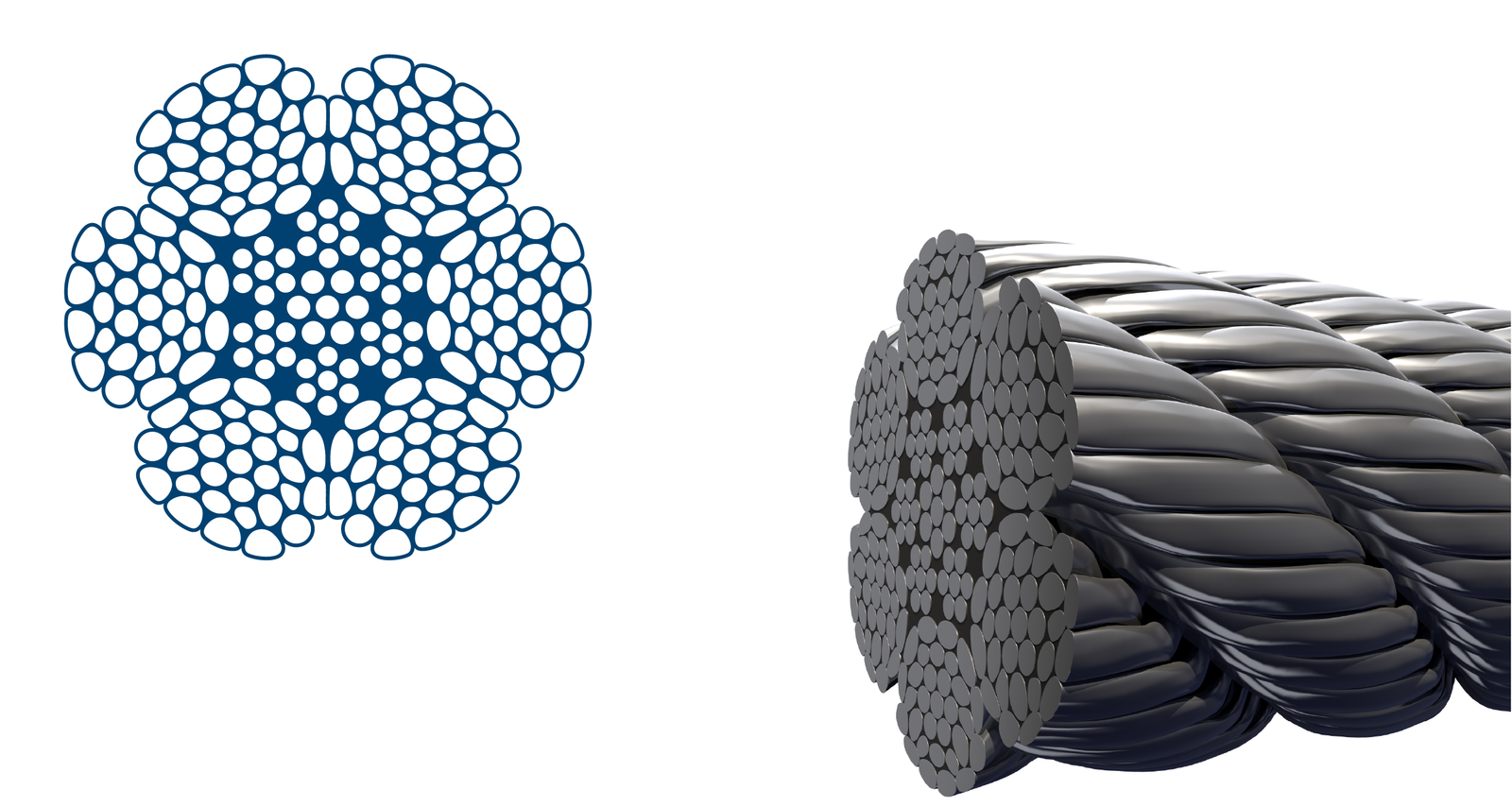
A wire rope can be the strongest component in a lift and still be the weak link. The reason is almost always the end. Every termination transfers the entire load from the rope into the hardware, and every termination is a place where the load path changes direction.
A wire rope end termination is specified by the rope construction and diameter, the termination method, the load and environment, and the standard it must satisfy. We build cast, swaged, and wedge terminations as complete certified assemblies, so the load transfer is tested rather than assumed.
Buyers often send us a diameter and ask for a socket. That is not enough information to specify a termination safely. The same 24 mm rope needs a different termination on a crawler crane than it does on a mooring line, and the difference is not a detail. It is the difference between an assembly that lasts ten years and one that fails in the first season.
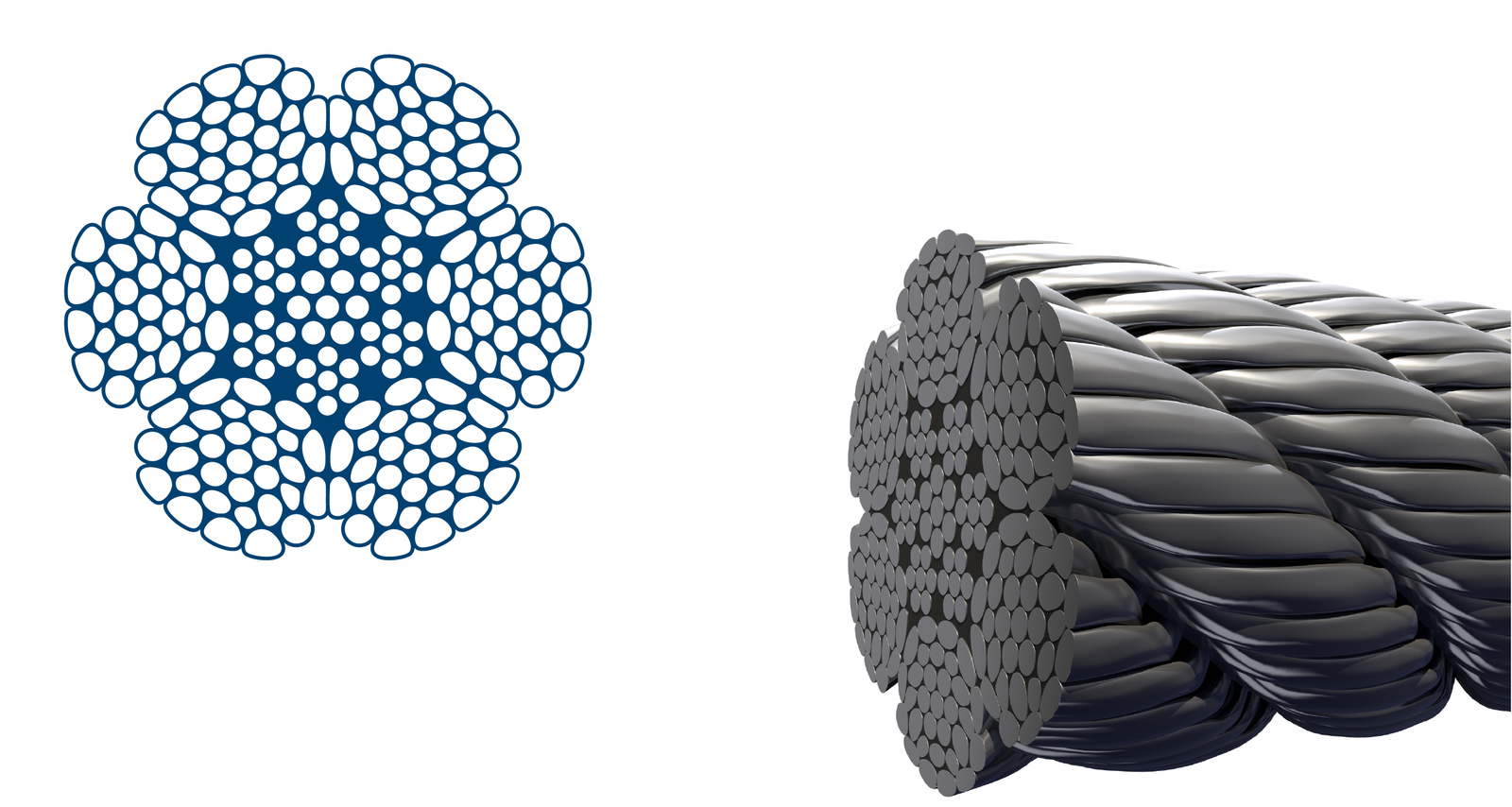
What Is a Wire Rope End Termination?
The termination is the component that closes the rope and lets it connect to something else.
A wire rope end termination forms an eye or a fitting at the rope end so the load can pass from the rope into a hook, a shackle, a winch, or a structural anchor. It must transfer the full working load without slipping, without unraveling, and without a stress concentration that cuts the rope.
Four things have to be right at the same time. The rope must be prepared correctly. The termination must match the rope diameter and construction. The installation must follow the method the termination was designed for. And the finished assembly must be inspected and certified before it carries load.
When any one of these fails, the failure usually appears at the same place. That is the reason we treat the termination as part of the rope rather than as an accessory.
What Are the Main Types of Wire Rope Sockets?
Sockets fall into three families, defined by how the rope is held.
We use cast spelter sockets for permanent heavy-duty terminations, swaged sockets for compact and inspectable connections, and wedge or mechanical sockets where the connection must be adjustable or reusable. Each family has a different strength, a different installation method, and a different inspection regime.
| Socket type | Termination method | Key feature | Typical application |
|---|---|---|---|
| Closed spelter socket | Molten metal | Fully enclosed, permanent, maximum strength | Heavy lifting, offshore mooring, cranes |
| Open spelter socket | Molten metal | Inspectable while retaining high load capacity | Marine and offshore where inspection is required |
| Closed swage socket | Mechanical compression | Fully enclosed, compact, strong | Hoists, elevators, construction cranes |
| Open swage socket | Mechanical compression | Compression visible for inspection | Lifting systems needing periodic checks |
| Wedge socket | Mechanical wedge | Adjustable and reusable | Temporary rigging, hoisting, tensioned cables |
| Rope pear socket | Cast or swaged | Pear-shaped, streamlined, reduces snagging | Offshore lifting, pendants, hook connections |
| Anchor pendant socket | Pre-fabricated | Ready-to-use assembly | Marine anchor lines, offshore mooring |
How Does a Cast Spelter Socket Work?
Spelter casting is the oldest and still the most proven termination method for heavy lifting.
In a spelter socket the rope end is fanned out, the strands are cut at an angle, and the assembly is filled with molten zinc, aluminum, or resin. The metal flows between the strands and forms a solid body that carries the load.
The procedure matters. First the rope is fanned so the strands spread evenly inside the socket. Then the strands are cut back at an angle so each one has a different length. This staggering is what distributes the load between the strands rather than concentrating it on one.
The socket is then filled. With zinc, the casting is done at a controlled temperature so the metal bonds to the steel without damaging the wires. With resin, the cavity is filled and cured. In both cases the temperature and timing have to be controlled, and this is exactly why we do the socketing in our own plant rather than leaving it to site.
The result is a permanent connection. It cannot be adjusted or removed without cutting the rope. That is a disadvantage in temporary rigging and a significant advantage in a permanent installation.
Why Choose an Open Spelter Socket?
The only structural difference between open and closed spelter sockets is the visibility of the strand arrangement. The open type lets an inspector see whether the strands are correctly seated and whether the cast has moved.
For marine and offshore work, that visibility is worth having. On a mooring line or an offshore pendant, the termination is inspected on a schedule and an inspector needs to be able to see the strand condition without taking the socket apart.
How Does a Swaged Socket Work?
Swaging replaces the casting with pure mechanical force.
In a swaged socket the rope end is inserted into a steel or alloy body and compressed by a hydraulic press or mechanical swager. The strands are crushed into the socket wall, producing a permanent connection with no heat and no chemistry involved.
The advantages are practical. There is no pouring temperature to control, no curing time to wait, and no risk of the cast damaging the rope. The finished assembly has a clean profile with no bulky flash. And because nothing is heated, the rope retains its full strength right up to the socket.
The compression must be uniform. Over-compression can crush the wires and reduce the rope’s strength at the socket. Under-compression leaves the strands free to move, which is exactly the failure mode that shows up later as a slipping rope.
This is why we swage in a controlled press with recorded force, and why we proof-load the finished assembly rather than relying on the appearance of the compression.
When Do You Use a Wedge Socket?
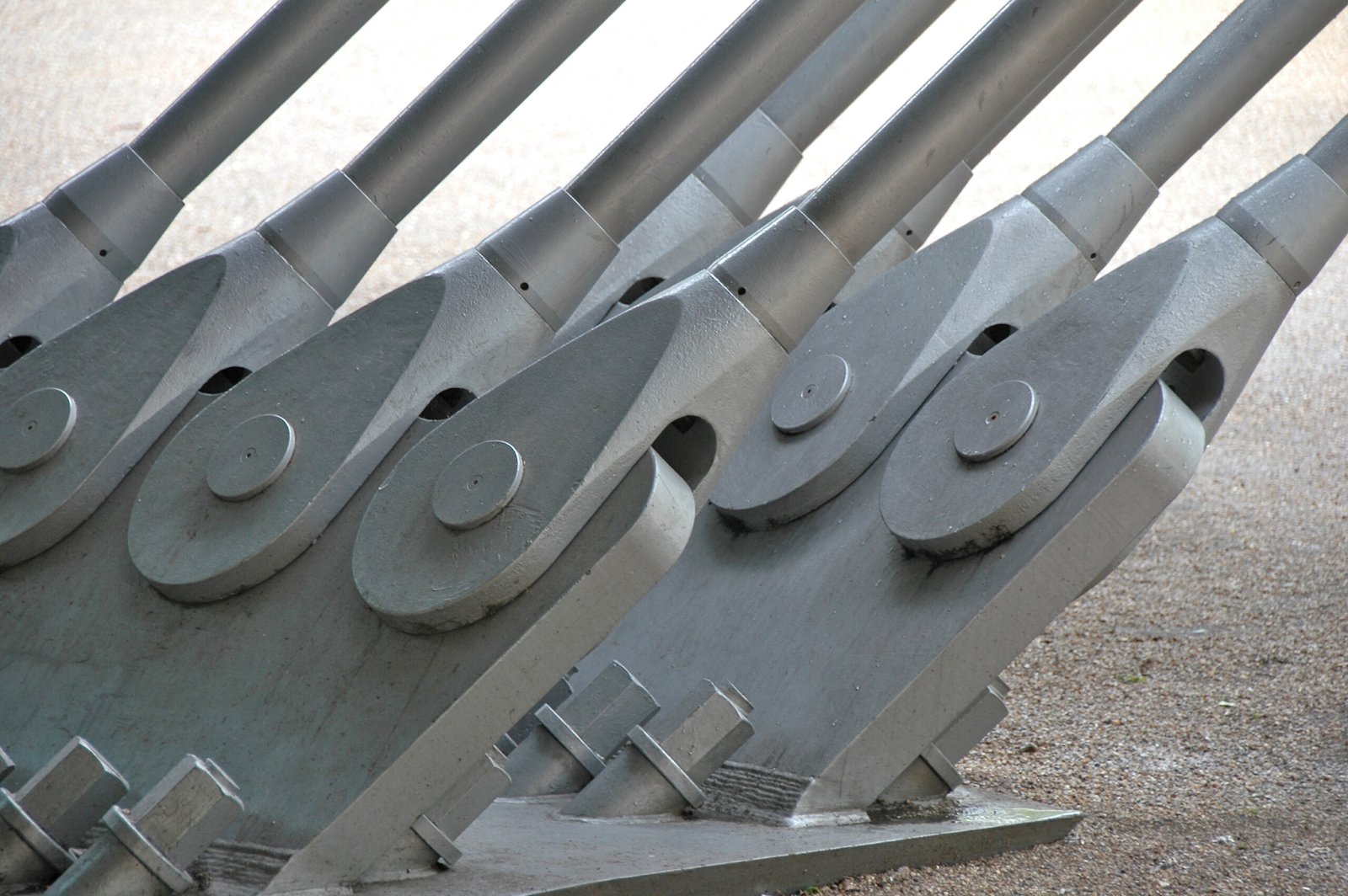
Wedge sockets are the answer when the connection has to come apart again.
A wedge socket grips the rope with a mechanical wedge that bites into the strands under load. It can be installed and removed by hand, adjusted to change the effective length, and reused on a different rope of the same diameter.
Because the wedge does the gripping rather than a casting or a press, the connection is not permanent. The wedge wears into the rope over time, so the rope has to be examined at the wedge position during every inspection. This is normal and expected. It is also the reason a wedge socket is not the right choice for a permanent structural connection.
The wedge position leaves a mark on the rope. That mark is a useful inspection point, because it shows exactly where the maximum local stress has been applied.
What Is a Rope Pear Socket?
The rope pear socket, often known by the Nemag type name, has a streamlined pear-shaped body. It is designed to sit on a hook without catching on adjacent parts of the rigging.
We use the pear shape where the connection must stay clean, such as offshore lifting and pendant systems where snagging on neighbouring hardware would be a real hazard.
Anchor pendant sockets work on the same principle. They arrive as a pre-fabricated assembly, which removes the socketing work from the installation schedule entirely. For a vessel needing an anchor line replaced at short notice, that is a meaningful advantage.
Which Rigging Hardware Do You Need Alongside the Rope?
The socket transfers load into the next component. That component is usually hardware, and it has to match.
We supply the full rigging hardware range so the whole load path is specified by one supplier: shackles, hooks, turnbuckles, eye bolts and nuts, swivels, wire rope clips and clamps, pulleys and sheaves, couplers, and lifting rings and plates. Each piece is rated by working load limit and safety factor, and each one carries its own certification.
| Hardware | Function | Types we supply |
|---|---|---|
| Shackles | Connect slings, chains, and ropes to loads and anchor points | Bow, D, and snap shackles in carbon steel, alloy steel, or stainless |
| Hooks | Provide a quick attachment point for loads | Eye, clevis, and self-locking hooks, forged or alloy steel |
| Turnbuckles | Apply and adjust tension in cables and tie rods | Body with left-hand and right-hand threaded ends, carbon, galvanized, or stainless steel |
| Eye bolts and nuts | Create threaded attachment points | Shoulder eye bolts for angled loads, plain eye bolts for straight-line lifts, eye nuts |
| Swivels | Prevent twisting and tangling during lifting | Jaw and jaw, eye and eye |
| Wire rope clips | Form eye terminations and secure rope ends | U-bolt and saddle type with the correct number and torque |
| Pulleys and sheaves | Redirect force and provide mechanical advantage | Fixed and movable blocks |
| Lifting rings and plates | Provide certified lifting points on equipment and structures | Lifting eyes, lifting plates, anchor plates |
What About Shackle Shapes?
The shape is not decoration. It determines how the load is applied.
We use bow shackles for multidirectional loading, D-shackles for straight-line pulls, and snap shackles for quick release in marine work. The bow shackle spreads the load across a wider body, so it tolerates a load that changes direction during the lift. The D-shackle is stronger in a straight pull but should not be loaded at an angle.
Using the wrong shape is one of the most common rigging errors we see. A D-shackle loaded sideways can bend, and a bent shackle has no reliable strength left even if it looks intact.
How Many Wire Rope Clips Do You Need?
Clips are the one termination that buyers most often get wrong, because the correct number is not intuitive.
For a wire rope eye made with U-bolt clips, the number of clips equals the number of wire rope lays plus one, the clips are placed alternately, and the saddle of the clip always sits on the live end of the rope. Each clip is tightened in turn to the specified torque.
Putting the saddle on the dead end instead is the single most damaging installation mistake in rigging. It turns the clip into a wedge that cuts the rope under load. We see this on site inspections more often than any other fault.
How Do You Select the Right Terminal for Your Application?
Five inputs determine the correct termination. Missing any one of them leads to a wrong answer.
We select the termination from the rope construction and diameter, the working load and the safety factor, the environment, whether the connection is permanent or temporary, and the standard the assembly must satisfy. We then confirm compatibility with the hardware it connects to.
| Selection input | Why it matters |
|---|---|
| Rope diameter and construction | The socket bore and body must match the actual rope, including 6×36, 8×19, IWRC, and compacted constructions |
| Working load limit | The termination must meet or exceed the rope’s WLL under the applicable safety factor |
| Termination method | Cast, swaged, and mechanical differ in strength, inspectability, and reusability |
| Environment | Corrosion, salt, temperature, and abrasion decide the material and coating |
| Permanent or temporary | Permanent installations take cast or swaged; temporary or adjustable work takes wedge |
| Standard | ISO 2408, ASME B30.9, and DNV, ABS, or Lloyds for marine work |
Which Standards Apply?
The standards are not decorative. They define how the termination is built, how it is tested, and what documentation travels with it.
We work to ISO 2408 for steel wire rope terminations, ASME B30.9 for slings and rigging hardware, EN 13411-4 for spelter socketed cable assemblies and their proof load regime, and DNV, ABS, or Lloyds rules for marine applications.
We also provide BV, CE, RMRS, DNV, and ABS certification when the contract and inspection scope require it.
What Does a Real Crane Termination Look Like?
Specifications on a catalogue do not always match the drawing. A delivered assembly does.
For a 260-ton crawler crane we supplied a 24 mm D24 lifting wire rope assembly of 380,000 mm with a wedge type rope end, hot-dipped treated at the rope head, complete with the matching mother seat and swivel assembly. The drawing specified every component by part number, and the smallest component had to be replaced with a higher-strength alternative to meet the 520 kN minimum breaking requirement.
That last detail is the point. The original component was dimensionally correct and failed the load requirement. Changing it was not a suggestion, it was a requirement, and it had to be traced through the drawing before production.
We supply the termination as one documented assembly rather than a collection of parts. The customer receives the drawing, the part list, the rope specification, and the test records for the finished assembly.
How Do You Inspect and Maintain a Rope Termination?
Inspection is where a good termination is protected or lost.
We recommend inspecting every termination at the same interval as the rope itself, checking specifically for corrosion, cracks, deformation, wear at the wedge, and any change in the rope’s position inside the socket. A cast or swaged socket cannot be repaired. It must be replaced.
The practical points for each type:
- Cast sockets: look for cracking around the socket, corrosion at the rope-to-metal interface, and any visible movement of the strands
- Swaged sockets: check for deformation of the body, corrosion at the mouth, and any indication that the rope has moved inside the socket
- Wedge sockets: examine the wedge seat for wear, and measure the rope at the wedge mark to confirm the diameter is still within limits
- Shackles: look for spread, bending, or wear on the pin, and confirm the pin is the correct type and fully seated
- Turnbuckles and swivels: check the threads for galling and corrosion, and lubricate the moving parts
- Clips: re-check torque on the first inspection, because settling occurs after the initial load
Two field habits cause most premature failures. The first is mixing components from different manufacturers in one assembly. The second is reusing a socket that has been shock loaded, because the material may be damaged even when it looks normal.
How Do You Order a Certified Rope Termination Assembly?
The order needs to state enough for us to build a complete, verifiable assembly.
We ask for the rope diameter and construction, the length of the finished assembly, the termination type on each end, the hardware at each end, the load and safety factor, the environment, and the certification required. With that we can quote a complete assembly rather than a loose fitting.
The information we need:
| Required item | Example |
|---|---|
| Rope specification | 24 mm, 6XK36WS-IWRC, 2160 MPa |
| Assembly length | 380,000 mm total, 3,000 mm free length at each end |
| Termination type | Wedge rope end at the drum end, spelter socket at the hook end |
| Hardware | Swivel and mother seat assembly, supplied with part numbers |
| Working load and safety factor | Per the crane rating and the applicable standard |
| Surface condition | Hot-dip galvanized, bright, or plastic impregnated |
| Certification and documents | EN 12385-4, plus third-party inspection if required |
| Drawing | Customer drawing with interface dimensions, or we issue one for approval |
We operate four production lines, our own socketing and swaging equipment, and a CNAS-accredited testing laboratory with a 2000 t by 800 m full-size test bed. We can produce the rope, the termination, the hardware, and the documentation as one package, and we proof-load every assembly before dispatch.
What Should You Ask a Rigging Hardware Supplier?
Ask the questions that separate a supplier from a trader.
I recommend asking: is the whole assembly certified or only the rope, who performs the socketing, is the press force recorded, what is the acceptance criterion for the proof load, and can you supply a drawing with part numbers before we order.
The last question is the one that saves money. A termination ordered without a drawing is a termination that comes back for modification, and the modification cost is always higher than the drawing cost.
Send us the rope diameter, the assembly length, the termination type, and the load case. We will return a technical proposal with a drawing, a part list, and a delivery programme.
Conclusion
We specify a wire rope termination by matching the rope, the termination method, the hardware, and the certification to the load and the environment, then deliver it as a proof-loaded documented assembly.