Most full locked cable enquiries reach us in one line. “We need 60 mm, please quote.” That single line is not enough to specify a structural cable. It tells us a size and nothing else.
A full locked cable is specified by its construction, strength grade, minimum breaking force, lay direction, coating system, prestretching, termination, and testing regime. We build it to EN 12385-10:2003 with Z-shaped outer wires and Galfan or hot-dip galvanized protection.
This guide walks through the specification step by step, with our real production table, so you can see exactly what we can supply and what we need from you before we can quote a cable that will pass the designer’s check.
What Is a Full Locked Cable?
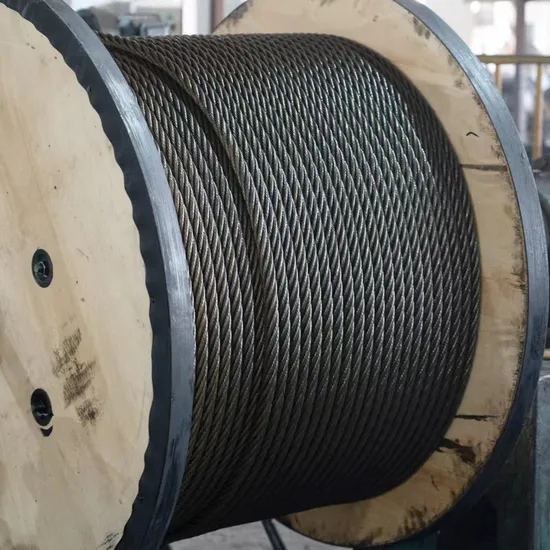
A full locked cable is a structural cable, not a rope that happens to be strong.
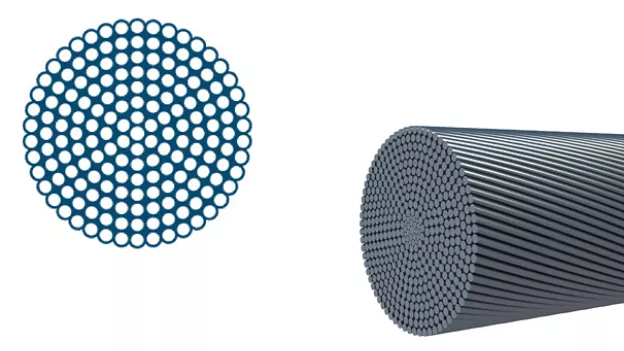
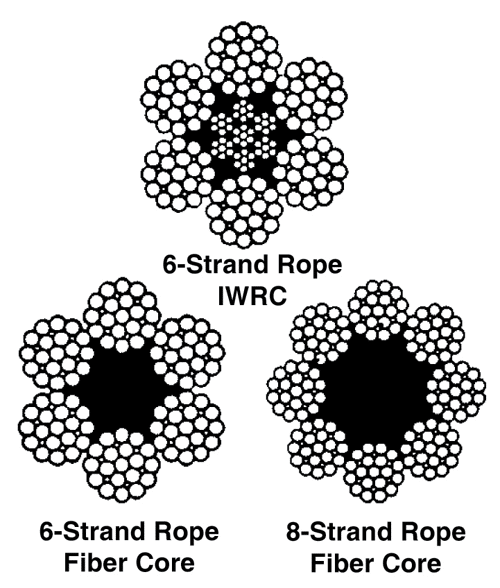
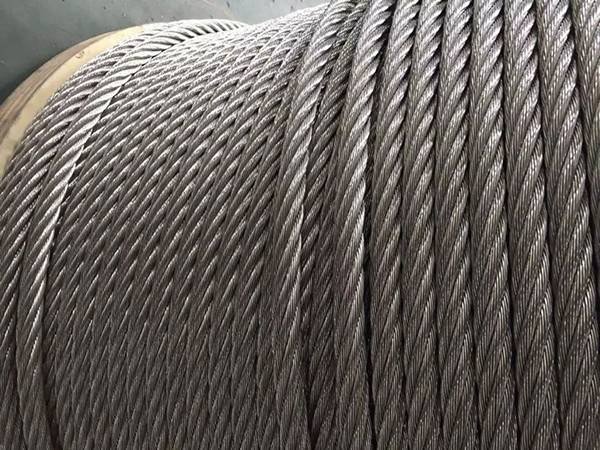
We build a full locked cable with a central core of round steel wires, intermediate layers of round wires, and an outer layer of interlocking Z-shaped wires. The Z wires close the surface, so the cable behaves as a compact, high-stiffness tension member.
That outer Z layer is the whole point. In an ordinary stranded rope the outer wires are round and sit next to each other with open gaps. In a full locked cable the outer wires are shaped, so under tension they press against their neighbours and lock. Three things follow from this.
- The metallic cross-section rises for the same diameter, because less steel is wasted in voids.
- The axial stiffness rises, because the locked layer resists internal movement.
- The surface becomes nearly continuous, which limits the paths for water and debris to enter.
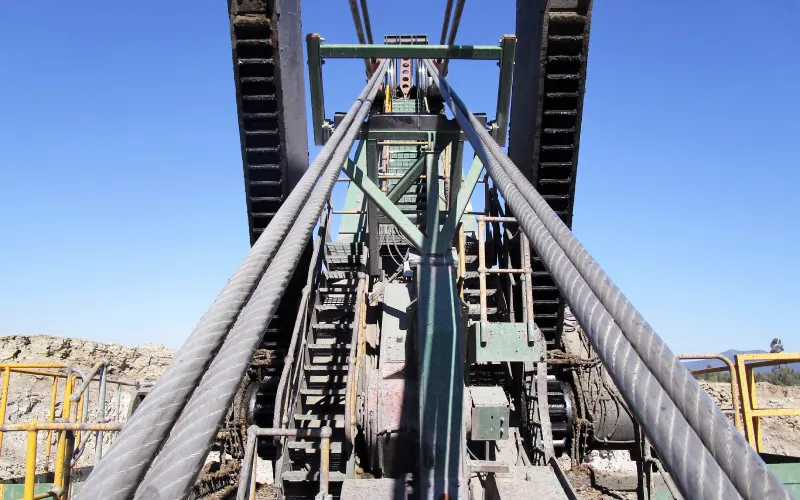
The result is a cable that behaves predictably over decades under a stable load. That is why we use it on bridges, stadium roofs, aerial tramways, tower stays, catwalks, and mining shaft structures.
What Is the Full Range of Sizes You Produce?
We produce full locked cables from Ø30 mm up to Ø140 mm. The table below is our standard published series.
Our standard range covers nominal diameters from 30 to 130 mm, with strength grades from 1180 to 1570 MPa, and we produce larger diameters up to 140 mm to project specification. Every cable is supplied with a minimum breaking force matched to its diameter and grade.
| Nominal diameter mm | Approx. weight kg/100m | MBL kN 1180 MPa | MBL kN 1270 MPa | MBL kN 1370 MPa | MBL kN 1470 MPa | MBL kN 1570 MPa |
|---|---|---|---|---|---|---|
| 30 | 513 | 613 | 680 | 740 | 787 | 845 |
| 32 | 584 | 697 | 774 | 842 | 896 | 961 |
| 36 | 739 | 882 | 979 | 1065 | 1134 | 1217 |
| 38 | 823 | 983 | 1091 | 1187 | 1263 | 1356 |
| 40 | 912 | 1090 | 1209 | 1315 | 1399 | 1502 |
| 42 | 1005 | 1201 | 1333 | 1450 | 1543 | 1656 |
| 46 | 1206 | 1380 | 1599 | 1739 | 1851 | 1987 |
| 48 | 1313 | 1596 | 1741 | 1894 | 2015 | 2163 |
| 50 | 1425 | 1732 | 1889 | 2055 | 2187 | 2347 |
| 54 | 1662 | 2020 | 2203 | 2397 | 2550 | 2738 |
| 56 | 1788 | 2181 | 2370 | 2578 | 2743 | 2944 |
| 58 | 1917 | 2331 | 2542 | 2765 | 2942 | 3158 |
| 60 | 2052 | 2495 | 2720 | 2959 | 3149 | 3380 |
| 66 | 2483 | 3018 | 3292 | 3581 | 3810 | 4090 |
| 68 | 2636 | 3204 | 3494 | 3801 | 4044 | 4341 |
| 70 | 2793 | 3395 | 3703 | 4028 | 4286 | 4600 |
| 75 | 3263 | 3883 | 4251 | 4624 | 4920 | 5281 |
| 80 | 3712 | 4418 | 4836 | 5261 | 5598 | 6009 |
| 85 | 4191 | 4987 | 5460 | 5939 | 6319 | 6783 |
| 90 | 4698 | 5591 | 6121 | 6658 | 7085 | 7605 |
| 95 | 5235 | 6230 | 6820 | 7419 | 7894 | 8473 |
| 100 | 5800 | 6903 | 7557 | 8220 | 8747 | 9389 |
| 105 | 6395 | 7611 | 8331 | 9063 | 9643 | 10351 |
| 110 | 7018 | 8353 | 9143 | 9946 | 10583 | 11360 |
| 115 | 7671 | 9129 | 9993 | 10871 | 11567 | 12416 |
| 120 | 8352 | 9940 | 10881 | 11837 | 12595 | 13520 |
| 125 | 9063 | 10786 | 11807 | 12844 | 13666 | 14670 |
| 130 | 9802 | 11666 | 12770 | 13892 | 14782 | 15867 |
The breaking force scales with the square of the diameter. This is the single most useful relationship in the table. If the designer needs a larger load, we can often confirm whether a larger diameter or a higher grade is the cheaper route, and that conversation is worth having before the order is placed.
Which Strength Grade Should You Specify?
Grade selection is a balance between capacity and cost.
We supply full locked cables in 1180, 1270, 1370, 1470, and 1570 MPa, and we normally recommend 1570 MPa for structural tension members where the design allows it, because the higher grade reduces the required diameter and therefore reduces the weight, the cost, and the number of saddles and anchorages.
Take Ø60 mm as an example. At 1180 MPa the minimum breaking force is 2495 kN. At 1570 MPa it is 3380 kN, an increase of about 36 percent from the same cable and the same anchorage geometry.
Higher grade is not always better. In some legacy structures the anchorages were sized for a specific force, and a stronger cable can overload the anchorage instead of the cable. We check the interface drawings before we change the grade.
What Does the Lay Direction Designation Mean?
Full locked cables are supplied with a defined lay arrangement, designated on the drawing and certificate as ZZ or ZZZ.
We specify the lay direction on the manufacturing drawing and confirm it on the certificate, because it affects how the cable behaves under load and how it must be oriented at the anchorage. The designer sets this, and we build to it.
The practical consequence is at the socket. A cable that is fitted with the wrong lay orientation relative to its anchorage will not behave as the calculation assumes. This is one of the reasons we insist on approved interface drawings before production starts.
Which Corrosion Protection Should the Cable Have?
The Z-shaped outer surface helps, but it does not make the cable waterproof. A specification still has to name the protection system.
We supply Galfan-coated (95% Zn / 5% Al) Z-shaped outer wires with an internal zinc-rich blocking compound, which gives a four-stage corrosion protection system. We can also supply hot-dip galvanized wires, or stainless where the exposure demands it.
| Protection layer | What it protects against | Typical application |
|---|---|---|
| Galfan coating, 95% Zn / 5% Al | General atmospheric corrosion, two to three times the life of plain galvanizing | Outdoor structures, bridges, coastal exposure |
| Hot-dip galvanized wire | Surface rust in moderate exposure | Inland structures, roof cables, catwalks |
| Internal zinc-rich blocking compound | Moisture movement inside the cable | All structural cables, combined with the metallic coating |
| External protective coating or sheath | Chemical attack, abrasive dust, salt spray | Industrial, marine, and mine environments |
| Stainless steel wire | The most aggressive corrosion environments | Marine and highly exposed structures |
We also apply a patented anti-vibration surface treatment on our full locked cables, which helps control the fretting and vibration that appear at anchorages and saddles on long-term structural use.
How Does a Full Locked Cable Compare with an Open Spiral Strand?
Both are structural cables and both are legitimate. They are chosen by the design requirement, not by preference.
We use a full locked cable where the design needs a smooth, low-drag, nearly sealed surface with strong clamping behaviour, and we use an open spiral strand where the design needs the highest metallic cross-section and stiffness for a given diameter at the lowest unit cost.
| Property | Full locked cable | Open spiral strand |
|---|---|---|
| Outer wire | Interlocking Z-shaped | Round |
| Design modulus | 170 GPa | 150 GPa, prestretched |
| Surface | Nearly closed, smooth | Open, gaps between round wires |
| Clamping under saddle | Very even, pressure spreads across the locked surface | Good, contact at the round wire crowns |
| Entry of water and debris | Greatly reduced | Possible through the outer gaps |
| Mass for the same capacity | Lower, because the section is denser | Higher for the same capacity |
| Typical use | Handrails, deck edge cables, architectural and protective cables, stadium roof tension rings | Main cables, hangers, stays, roof cables |
One point to keep clear. A closed surface reduces water entry, it does not eliminate it. Water still enters through a damaged coating, an open cable end, a poorly sealed socket, or a condensation point inside the system. The protection system still has to be complete, including the terminations.
What Terminations Can a Full Locked Cable Use?
The termination transfers the load from the cable into the structure. If the interface is wrong, the cable is only as good as the weakest detail in it.
We supply spelter and resin sockets to EN 13411-4, swaged fittings, fork and eye sockets, and adjustable or fixed anchorages, and we proof-load every assembly before it leaves the plant. We also issue termination and interface drawings for approval before production.
| Termination | Advantages | Considerations |
|---|---|---|
| Spelter socket | Field-adjustable length, proven long-term record | Requires skilled installation and correct pouring temperature |
| Resin socket | Adjustable, clean profile, no heat distortion of the strand | Resin must be cured correctly before loading |
| Swaged fitting | Compact, uniform, no site chemistry | Fixed length, requires press capacity on site |
| Fork and eye socket | Allows articulation and rotation at the anchor | Must be specified with the correct articulation angle |
| Adjustable anchorage | Tensioning during installation, controlled final geometry | Adds a component that must be inspected and locked off |
Whichever we use, the assembly is proof-loaded and certified. A certificate for the cable alone is not a certificate for the cable and its socket.
What Testing Does a Full Locked Cable Need?
Testing is where the cable proves it is what the design assumed.
We test to EN 12385-10:2003 and supply wire certificates, strand breaking load, coating weight and adhesion, dimensional inspection, socket efficiency and proof load, and fatigue testing where the design demands it. Third-party witnessing can be arranged for every order.
| Test | What it verifies |
|---|---|
| Wire tensile test | Individual wire strength against the specified grade |
| Torsion test | Wire ductility, which predicts bending fatigue life |
| Reverse bend test | Resistance to repeated bending over a saddle or sheave |
| Coating test | Coating weight and adhesion to the wire |
| Diameter inspection | Finished cable diameter and, on request, the lay length |
| Breaking load test | The measured minimum breaking load of the finished cable |
| Socket efficiency test | Load transfer through the termination |
| Fatigue test | Performance under repeated cyclic loading |
We operate an in-house CNAS-accredited testing laboratory, a 4000 t compression test press, and a 2000 t by 800 m full-size test bed. The full-size bed matters, because a structural cable of 130 mm cannot be verified on a small laboratory rig.
Where Have Full Locked Cables Been Used?
Structural cable is judged on its references.
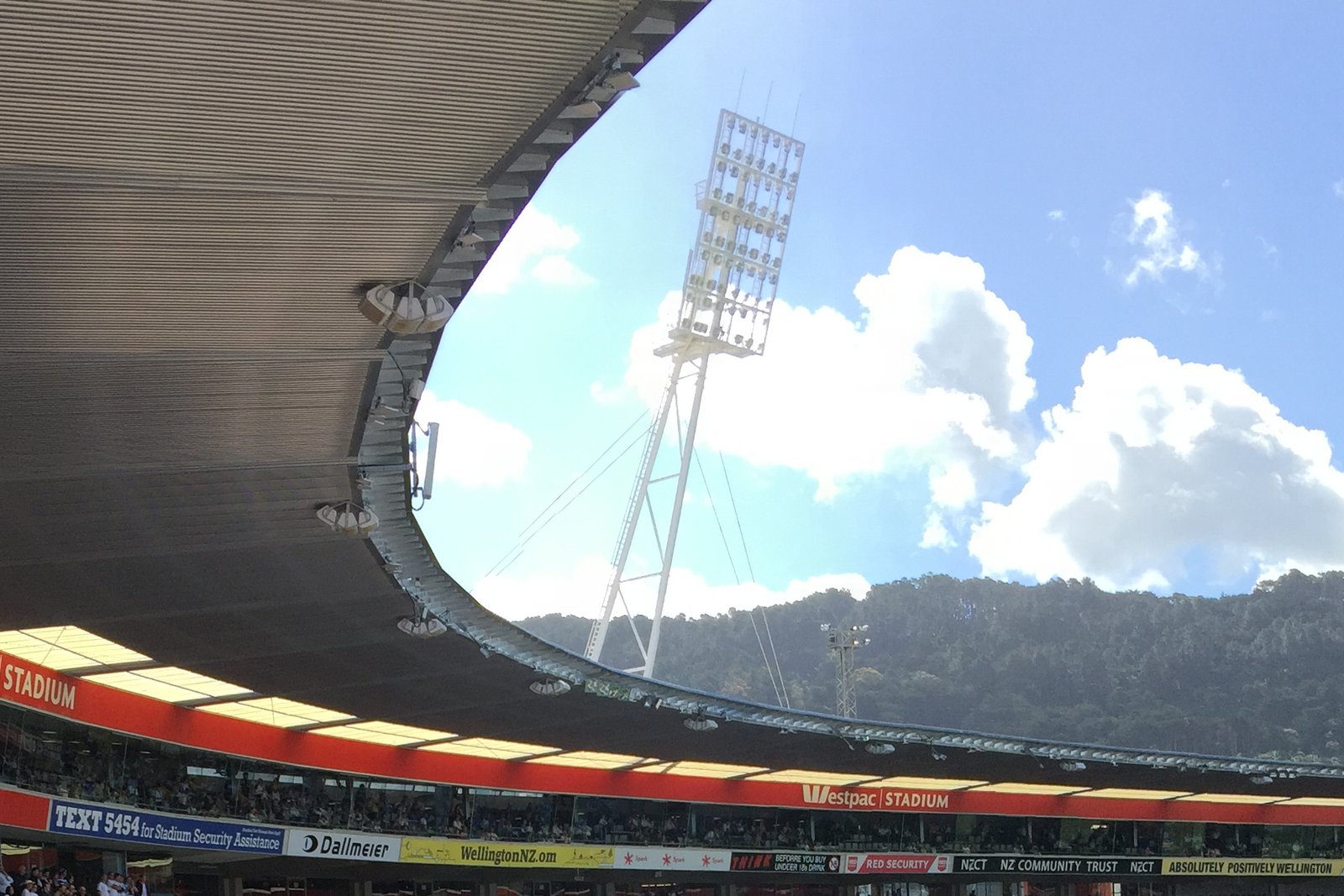
We have supplied full locked cables and spiral strand for stadium roof tension rings, railway station roof structures, and bridge hangers on three continents, and we have delivered over 55,700 metres of structural cable across 40 deliveries since 2018.
Representative projects include the Panjin stadiums in Liaoning, where suspension, edge, valley, and stay cables from Ø20 to Ø120 mm were supplied with a locked coil tension ring, the Qingdao North Railway Station with a Ø140 mm spiral strand, the Xuzhou Olympic Sports Center with six ring cables of about 587 m each, and the suspension bridge at Morona Santiago in Ecuador, where we supplied an 86 mm main cable with 36 mm hangers in Galfan.
How Do You Specify a Full Locked Cable for a Project?
This is the sequence that gets a cable right the first time.
We work from the design tension to the minimum breaking force, from the breaking force to the diameter and grade, then add the coating, the lay direction, the prestretching, the termination, and the test regime. We confirm the whole package on drawings before production, and we issue the certificate pack with the delivery.
The information we need to quote a full locked cable accurately:
| Required item | Example |
|---|---|
| Application | Handrail, hanger, stay, roof cable, tower stay, shaft structure |
| Design tension | Factored design load in kN, with the safety factor stated |
| Diameter | Ø60 mm, or the capacity required |
| Strength grade | 1570 MPa |
| Lay direction | As designated on the designer’s drawing, ZZ or ZZZ |
| Coating | Galfan, hot-dip galvanized, or stainless |
| Prestretching | Required or not |
| Termination | Spelter, resin, swaged, fork and eye |
| Length per coil and total quantity | 1,200 m per coil, 6 coils |
| Testing and certification | EN 12385-10, EN 13411-4 proof load, third-party witness |
Send us the drawings and the load cases. We will return a cable schedule with termination details, a delivery programme, and the supporting test information.
What Should You Ask a Full Locked Cable Manufacturer?
Before you compare two quotations, check that they contain the same things.
I recommend asking: is the minimum breaking force stated for the actual diameter and grade, is the coating system named, is prestretching included, does the price cover the socketed assembly with proof load, does the certificate pack meet the contract, and can you show a reference on a comparable project.
A quotation given as a price per kilogram cannot be compared against a quotation given as a complete certified assembly. Ask both suppliers to state exactly what is included, then compare like for like.
Conclusion
We specify a full locked cable by matching the diameter, grade, lay direction, coating, prestretching, termination, and testing to the design requirement, then prove it with full-size testing and a full certificate pack.