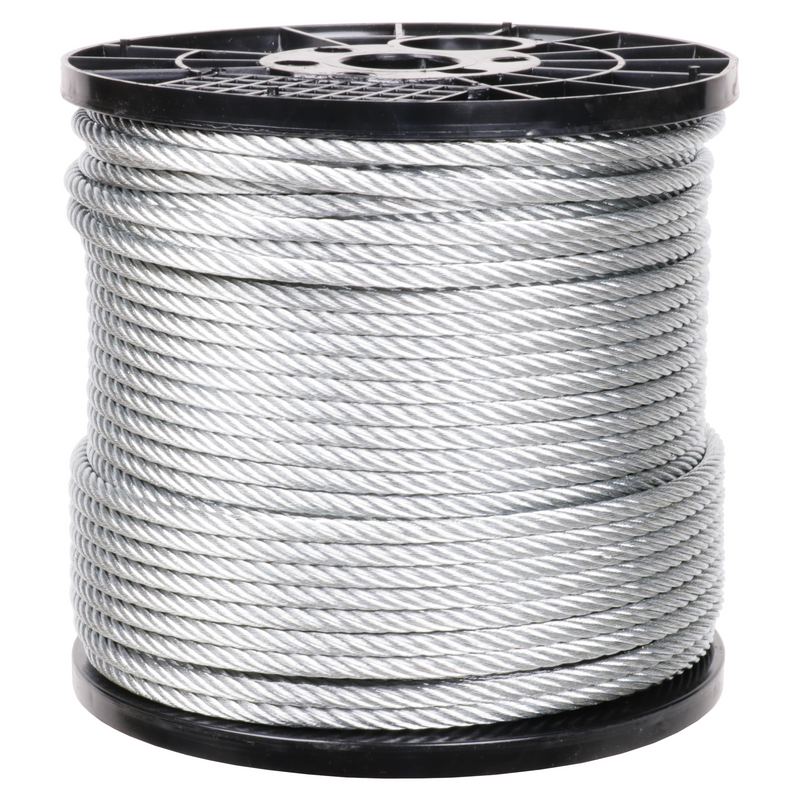
A prestressed concrete structure depends on one thing: the tension in its tendons. If that tension drops, the slab cracks and the bridge loses its profile. So the cable in the tendon cannot be an ordinary wire rope.
Buyers ask us the same three questions every time. How many wires should the strand have. Which grade do I write on the purchase order. And does it need galvanizing.
Prestressed steel strand is a cable made of 2, 3, 7 or 19 high-strength steel wires, twisted together and then stress relieved so it holds its length under a permanent load. It is the reinforcement that goes inside prestressed concrete, and it stays in tension for the life of the structure.
Here is what we build, what the numbers mean, and how to specify it without guessing.
What Is Prestressed Steel Strand?
Strand starts as high-carbon steel wire, with carbon content above 0.6 percent. It is cold-drawn through a series of dies and then patented, and that heat treatment gives it the fine pearlite structure a prestressing wire needs.
Prestressed steel strand is a straight, stiff, high-strength cable made of 2, 3, 7 or 19 wires. It has high strength, good relaxation performance, a high yield strength, and it stays relatively straight when the coil is opened out.
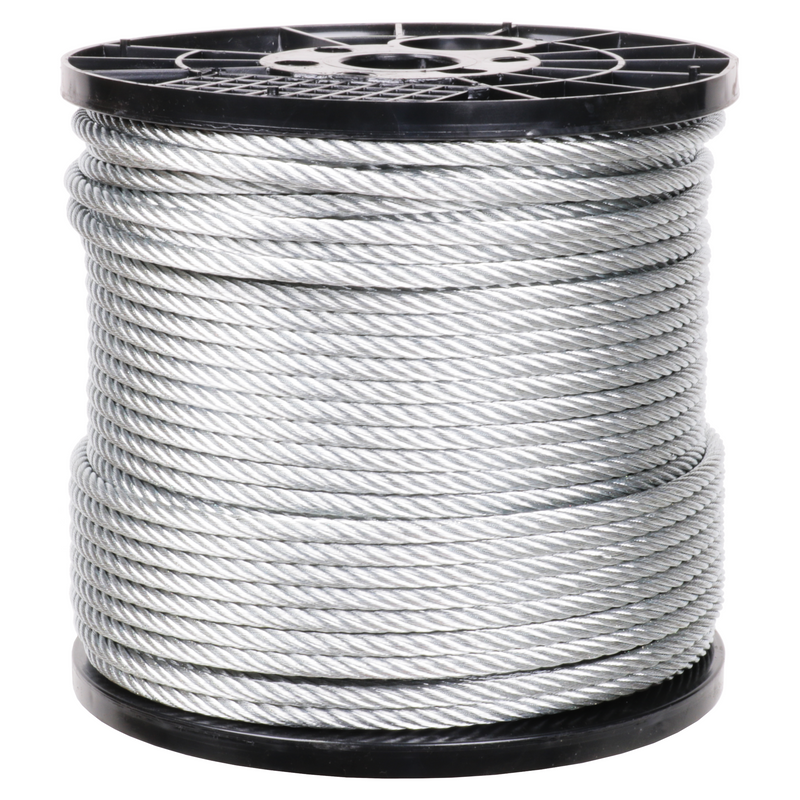
The wire starts as rod of 5.5 mm to 14 mm. We run that chain in our own plant, so the certificate follows the steel from the heat to the reel.
How Is Prestressed Strand Different from Wire Rope?
A wire rope is a flexible rope for lifting and running. A prestressed strand is a straight structural tendon. It carries a high static tension over long distances, it must not rotate, it must not creep, and it must not relax. It is never spooled over a sheave in service.
| Feature | Wire rope | Prestressed steel strand |
|---|---|---|
| Built for | Bending over sheaves and drums | Staying straight under permanent tension |
| Structure | Six or eight strands of many wires | One strand of 2, 3, 7 or 19 wires |
| Treatment | No stress relief | Stress relief, also called stabilization treatment |
| Rotation in service | Yes, managed by lay and design | No |
| Finish | Bright, galvanized, impregnated, coated | Bright or galvanized |
| Typical work | Cranes, hoists, mooring, elevators | Concrete tendons, prestressed elements |
A third product gets confused with this one. Spiral strand is a large cable laid up from 1×7 up to 1×547 wires for stays and pipe reinforcement, working through a mechanical anchor. Prestressed strand is smaller, stiffer and stress relieved. We build both.
What Do the 2, 3, 7 and 19 Wire Designs Mean?
Two wires and three wires are the light sections. Seven wires is the workhorse: one central wire with six around it, stiff enough to stay straight and strong enough for almost every building and bridge tendon. Nineteen wires, one centre plus six plus twelve, puts more steel into the same outside diameter.
| Wires | Layout | What it gives you |
|---|---|---|
| 2 | Two wires | The smallest and most flexible strand |
| 3 | Three wires | A little more steel, still easy to feed through a duct |
| 7 | One centre wire and six around it | The standard prestressing strand, and the design named in almost every specification we see |
| 19 | One centre wire, six inside, twelve outside | More steel in the same outside diameter, for the larger tendons |
Why Does Stress Relief Treatment Matter?
A high-strength wire under a constant load slowly loses a little of its length. That is relaxation. In a crane rope it does not matter. In a prestressed tendon it does.
Every strand we supply for prestressed concrete goes through a stress relief treatment, also called stabilization treatment. The wire is heated under tension so the elastic part of the stretch is taken out before the strand is coiled. Without it the tendon would lose force over the life of the structure.
One public bridge specification we quoted against called for uncoated seven-wire low-relaxation strand to ASTM A-416 or AASHTO M-203, at 1860 MPa grade, with an elastic modulus of 197,000 MPa. Low-relaxation strand is named in tender documents for exactly this reason.
Which Grade Should You Choose: 1860 MPa and Its Neighbours?
Grade is the tensile strength of the wire, written in megapascals. Everything downstream depends on it.
1860 MPa is the common grade, and it is the one most bridge and building specifications ask for. It is also written as grade 270 in imperial units. The other grades in the range we supply are 1720, 1770, 1960, 2000 and 2100 MPa.
1720 and 1770 MPa sit at the lower end. The higher grades let the designer keep the section smaller for the same load.
Grade and diameter together set the breaking load. We never size a tendon from a catalogue table. We size it from the certified value on the mill certificate, because the certificate is what the engineer signs off against.
What Are the Real Sizes, Loads and Masses of 1×7 Strand?
Diameter, breaking load and mass move together, so we quote them together. Here is a real series from an order we supplied.
This is 1×7 strand at 1860 MPa to GB/T 5224-2014, ungalvanized, exactly as we quoted it. The 15.2 mm strand carries 260 kN and weighs 1.101 kg per metre. The 17.8 mm strand carries 355 kN and weighs 1.5 kg per metre.
| Diameter | Grade | Standard | Breaking load | Mass | Length |
|---|---|---|---|---|---|
| 15.2 mm | 1860 MPa | GB/T 5224-2014 | 260 kN | 1.101 kg/m | 9000 m |
| 17.8 mm | 1860 MPa | GB/T 5224-2014 | 355 kN | 1.5 kg/m | 10000 m |
Those numbers check out against each other. A 15.2 mm strand breaking at 260 kN at 1860 MPa contains about 140 square millimetres of steel, which is about 1.10 kg per metre. The quoted weight is 1.101 kg, and the same calculation on the 17.8 mm strand gives 1.50 kg against a quoted 1.5 kg. Load and weight on the certificate describe the same section of steel.
One more note on sizes. 15.24 mm is 0.6 inch exactly, and 12.7 mm is 0.5 inch. Both are standard sizes in bridge specifications, so a metric order and an imperial order often describe the same strand.
Should the Strand Be Galvanized?
Galvanizing is the one real choice on the finish.
Ungalvanized strand is the default for prestressed concrete, because it is the version that bonds best to the grout and to the concrete. Galvanized strand is used where the tendon sits in a wet duct, in a tank, in a marine splash zone, or in any box where the strand has to survive the grouting and the weather.
We have quoted 15.24 mm 7-wire PC strand at 1860 MPa in both finishes. The ungalvanized version ran at 736 US dollars per ton FOB Shanghai, the galvanized version at 1176.66 US dollars per ton. Galvanizing moves both the price and the lead time, so it belongs in the enquiry, not in a later revision.
Galvanizing is a finish on the wire, not a sheath around the strand, so it does not add to the outside diameter. Read the breaking load from the certificate.
How Do You Specify Strand on the Order?
A strand order is not complicated, but it is unforgiving. Get the wire count, the diameter, the grade, the finish and the length right, and everything else follows.
Give us five things: the construction, the diameter, the grade, the finish and the length. We will return the certified breaking load, the mass, the coil plan, the packing and the delivery date, together with the mill certificate for the lot.
| Line on the order | What to write | Example from our own orders |
|---|---|---|
| Construction | Number of wires in the strand | 1×7, 1×19 |
| Diameter | Outside diameter | 9.53, 12.7, 15.2, 15.24 and 17.8 mm |
| Grade | Tensile strength of the wire | 1860 MPa, grade 270 |
| Standard | The product specification | GB/T 5224-2014, ASTM A-416, ASTM A475 |
| Finish | Surface of the wire | Ungalvanized, galvanized |
| Length | Metres per reel, or total weight | 3000, 9000, 10000 and 30000 m |
| Packing | Reel, wheel, tray or export package | Iron or wooden wheel, tray, export package |
Two details decide whether the order can be delivered. The standard has to match the drawing, and the packing has to match the site. A precast plant with a straddle carrier cannot take an iron wheel.
What Do Real Strand Orders Look Like?
These are strand orders we quoted and supplied. Every figure is traceable to the order it came from.
| Product | Size | Grade and standard | Finish | Quantity | Price and terms |
|---|---|---|---|---|---|
| 7-wire PC strand | 15.24 mm | 1860 MPa | Ungalvanized | 500 t, 3000 m per roll | 736 USD/t FOB Shanghai |
| 7-wire PC strand | 15.24 mm | 1860 MPa | Galvanized | 500 t, 3000 m per roll | 1176.66 USD/t FOB Shanghai |
| 7-wire PC strand | 9.53 mm | 1860 MPa | — | 50 t | 916.67 USD/t CIF Jebel Ali |
| 7-wire PC strand | 12.7 mm | 1860 MPa | — | 50 t | 939.39 USD/t CIF Jebel Ali |
| Prestressing steel strand | 15.2 mm | — | — | 110 t | 878.73 USD/t DAP Johor |
| Reinforcement strand 1×7 | 15.2 mm | 1860 MPa, GB/T 5224-2014 | Ungalvanized | 9000 m | 9.17 CNY/m CIF Novokuznetsk |
| Reinforcement strand 1×7 | 17.8 mm | 1860 MPa, GB/T 5224-2014 | Ungalvanized | 10000 m | 12.88 CNY/m CIF Novokuznetsk |
| Steel strand 1×19 | 9/16 in, 14.29 mm | Grade A, ASTM A475 | Galvanized | 30000 m in 10 reels | 15 CNY/m |
Read the table three ways. The first two rows are the same strand in two finishes at the same tonnage, so the whole price difference is the galvanizing. The two Gulf rows are priced by the ton, and the price barely moves between a 9.53 mm and a 12.7 mm strand. The 15.2 mm and 15.24 mm rows are the same strand.
The 1×19 row is the only order where the customer wrote the breaking load into the specification itself: 33,700 lbf, which is 15.28 tonnes, for a Grade A galvanized strand to ASTM A475 at 9/16 inch. When the order names a breaking load, we certify to that number and not to a catalogue table.
How Do You Handle, Inspect and Store Strand on Site?
Strand is stiff and it wants to stay straight, so most of the damage happens before it ever reaches the stressing bed.
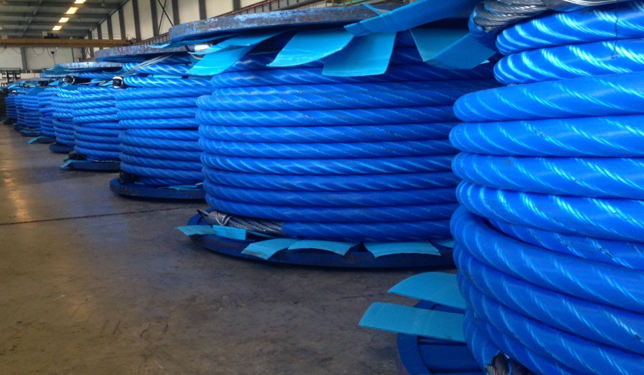
Never unreel a strand by pulling it off the coil, and never drag it across a floor. Stand the reel on its flange and let the strand come off the top, the same way you unreel any wire rope. Store the reels off the ground and out of the rain, and do not stack them so the coil takes a set.
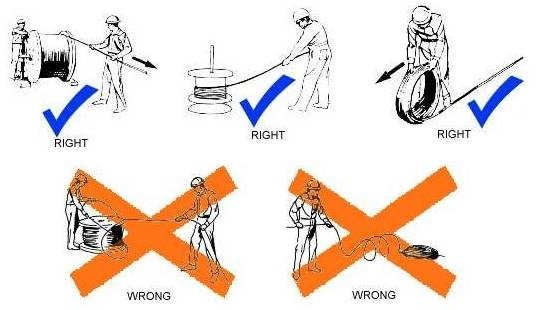
Three more rules on site. Do not let the strand kink, because a kink is a permanent stress raiser and the stressing jack will find it. Keep the ends sealed, because rust at the anchorage end of a tendon cannot be fixed once the concrete is cast. And never push a damaged section into a duct to save time on the run.
What Do Anchorage and End Fittings Ask of the Strand?
End fittings are chosen for the strand, not the other way round. The anchorage size follows the strand diameter and the grade, the number of corners in the anchor follows the wire count, and the grip must be made on the strand itself. A 7-wire strand takes a 7-wire anchor, and a 19-wire strand takes a 19-wire anchor.
One public bridge specification we quoted against called for 12T13 and 19K15 anchor systems, which match 12.7 mm and 15.24 mm seven-wire strand. Anchor size, strand size and grade have to agree, or the tendon cannot be stressed.
How Do You Order Prestressed Strand from Us?
Send us the specification or the drawing, the diameter, the grade and the quantity in tonnes or metres. We will return a technical proposal with the construction, the certified breaking load, the mass, the coil length, the packing plan and the delivery date, together with the mill certificate for the lot.
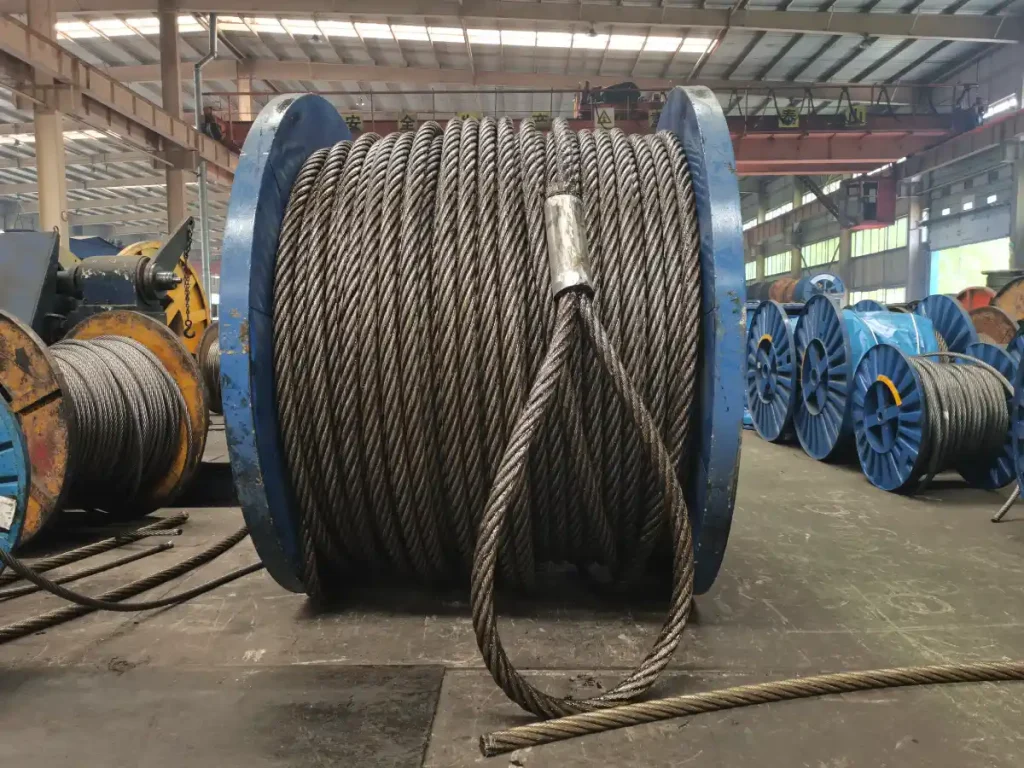
Production time on the orders above runs from five days on a paid order up to seventy days where the lead time is longer. Packing is by iron or wooden wheel on the larger orders, by tray for the precast plants, and by export package for the containerised shipments. Weights are on the packing list: 500 tons net and 535 tons gross on one order, 24.9 tons net and 27 tons gross on a 19000 metre order, and about 30 tons net and 31 tons gross on a 30000 metre order of 1×19.

Conclusion
Prestressed steel strand is a simple product with a narrow job. It sits straight in a tendon, it holds a permanent tension, and it must not relax.
The decisions that matter are few and their effect is large. Pick the wire count the anchor system expects, which is usually seven. Pick 1860 MPa unless the design says otherwise. Settle the galvanizing question early, because it changes both the price and the lead time. And size the tendon from the certificate, not from a table.
If you are quoting a precast order, a bridge bundle or one reel for a site, send us the specification and the load cases. We will tell you plainly if a strand we make is not the strand the drawing wants.