A rope gets replaced because the outside looks tired. Then the new rope sits on the drum for a month and the same problem comes back. The corrosion was never on the surface. It was inside the strands.
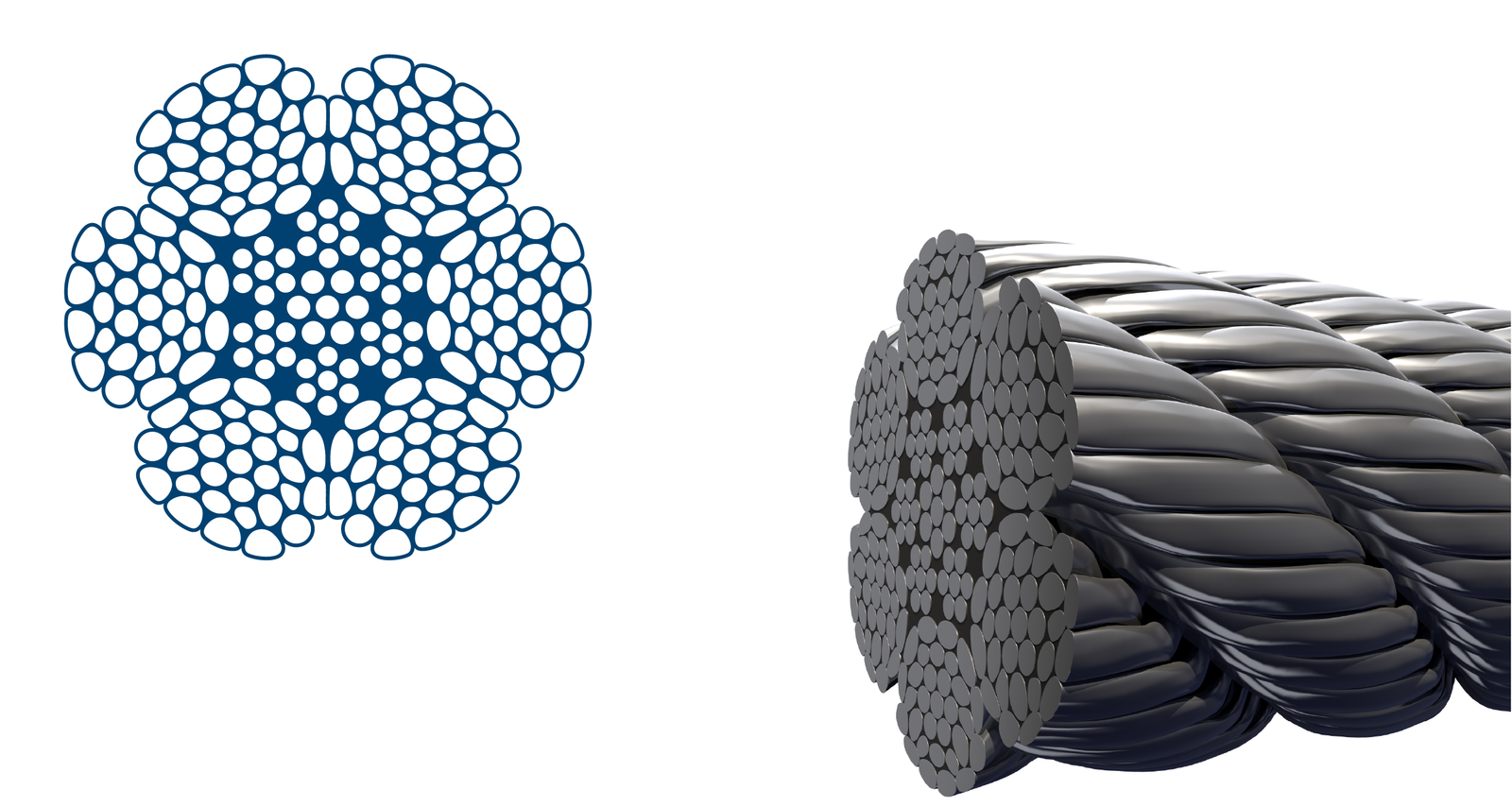
Plastic impregnated wire rope, usually called PI rope, is a steel wire rope in which the gaps between the wires inside each strand are filled with a polymer compound injected under pressure and then cured. We build it in 8XK26WS-EPIWRC, 8XK36WS-EPIWRC, 6X36WS-EPIWRC, 35WXK7-EPWSC and 35WXK7-EPIWRC. The fill seals the inner wires against water and chemicals, cuts wire-on-wire friction, and holds the rope steady on the drum.
A buyer who asks for galvanized rope and one who asks for PI rope are often solving the same problem in two ways. Here is how the finishes differ and where each one wins.
What Is Plastic Impregnated Wire Rope?
The definition is short. The consequences are not.
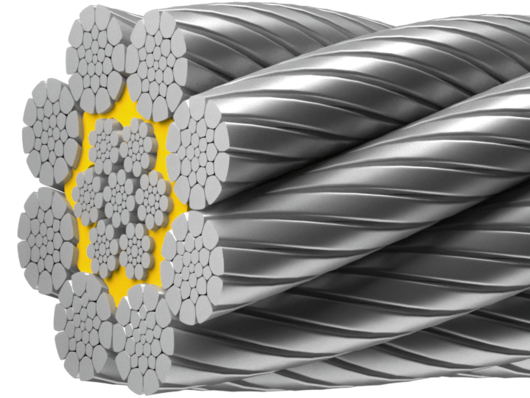
A plastic impregnated wire rope is an ordinary steel wire rope in which a polymer compound is injected under pressure into the voids between the wires of each strand and between the strands themselves. The compound is sealed and cured during manufacture, so it stays inside the rope for its whole life.
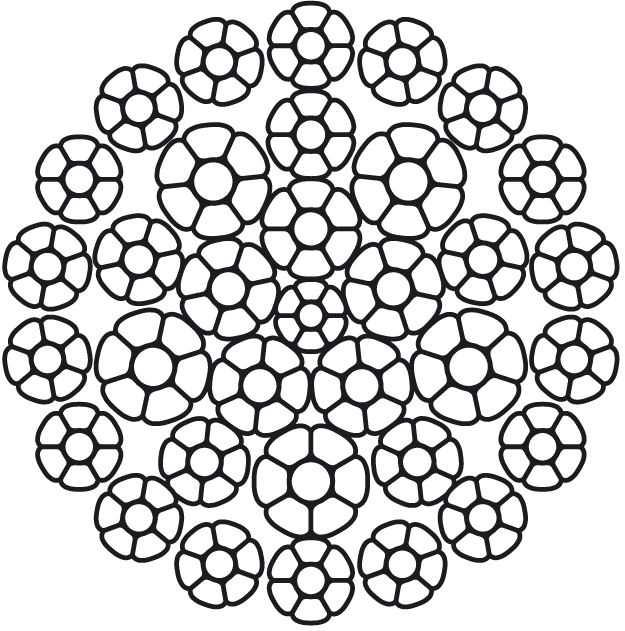
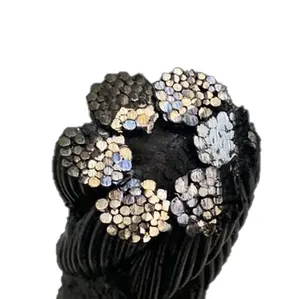
Three parts make up the rope. The core carries most of the load and can be a fibre core, usually polypropylene, or a steel wire core. The strands are high-carbon steel wires twisted together. The plastic fills the space between them, and that is what separates PI rope from a standard rope: in a normal bright or galvanized rope the gaps between wires are open channels, and water and salt walk into them to sit against the inner wires. In a PI rope they are closed.
How Does PI Rope Compare with Bright and Galvanized Rope?
This is the comparison most people want, so it comes first.
Galvanizing protects the outside of each wire with a zinc coating. PI impregnation fills the inside of each strand with polymer. Galvanizing stops corrosion from the outside in. PI impregnation stops it from the inside out. They solve different halves of the same problem.
| Property | Bright PI rope | Galvanized PI rope |
|---|---|---|
| How it is protected | Polymer fills the strand voids | Polymer fill plus zinc on every wire |
| Certified breaking load | Full catalogue value | A few percent below the bright value |
| Best fit | Damp duty, chemicals, multi-layer drums | Open-air and marine duty |
PI rope and galvanizing are not competing products. We ship PI rope in both bright and galvanized finish, and much of our PI order book is galvanized PI rope.
How Does the Impregnation Process Work?
The process explains the properties you can expect.
We impregnate by injecting a polymer compound into the finished strand under pressure, then sealing and curing it in place. The compound occupies the voids that would otherwise be open water channels, and it locks the wire positions relative to each other.
Three effects follow. Water and corrosive media cannot migrate into the strand and sit against the inner wires. The wires are held apart by a controlled film instead of rubbing directly, so less heat reaches the core. And the strand keeps its shape when pressed sideways, which makes multi-layer spooling stable.
The compound is not a coating on the outside of the rope, and this is the most common misunderstanding. A plastic coated rope has an external PVC or PE sheath. A PI rope has no outer sheath, so it does not protect against concrete abrasion.
Does PI Rope Lose Breaking Load Compared with Bright Rope?
This is the question that decides the purchase, and the answer is the opposite of what most people expect.
No. Our certified minimum breaking loads for PI rope match the standard bright rope of the same diameter, construction and grade. We checked this against our own mill certificates. On the 6X36WS line the PI rope certified at 22 mm and 36 mm in 1770 MPa reads 305 kN and 817 kN, and at 32 mm in 1960 MPa it reads 715 kN, the same as the bright table.
The same holds for 8XK26WS-EPIWRC. Our published table gives 766 kN at 30 mm in 1960 MPa, and the mill certificate for that rope reads 766 kN. Impregnation does not remove steel, so the load path is unchanged and you pay no strength penalty for the corrosion protection. Measured force runs slightly above the minimum: the 30 mm rope shows 766 kN certified and 778 kN measured.
What Does Galvanizing Cost You in Breaking Load?
Galvanizing has a real cost, and it is worth a number.
On our 8XK26WS-EPIWRC line the certified minimum breaking load of the hot-dip galvanized rope is about 94 to 95 percent of the bright catalogue value at the same diameter and grade. At 20 mm in 2160 MPa the bright value is 375 kN and the galvanized certificate reads 354 kN, and the table below shows the same pattern on the 35WXK7-EPWSC line.
| Rope | Diameter | Grade | Bright MBL | Galv. MBL | Difference |
|---|---|---|---|---|---|
| 8XK26WS-EPIWRC | 20 mm | 2160 MPa | 375 kN | 354 kN | -5.6% |
| 35WXK7-EPWSC | 36 mm | 2160 MPa | 1148 kN | 1147 kN | On certificate |
The reason is simple and it is not a defect. A zinc coating replaces part of the steel cross section with zinc, so the effective area carrying the load is slightly smaller than on a bright wire. The rope still measures the same diameter, but the certified force is set lower. Two rules follow. Size a galvanized rope from the certified value on the certificate, not from a catalogue table that may assume a bright rope. And check the line, because our galvanized 35WXK7-EPWSC certificates match the catalogue values.
Galvanizing also brings its own logic. The zinc is anodic to the steel, so it corrodes in preference to the wire underneath and protects it even where the coating is scratched.
What Are the Real Parameters for PI Rope?
Here is our published 8XK26WS-EPIWRC table. Every value is confirmed against our certificates.
| Diameter | Approx. weight kg/100 m | MBL 1770 MPa | MBL 1960 MPa | MBL 2160 MPa |
|---|---|---|---|---|
| 20 mm | 192 | 307 | 340 | 375 |
| 30 mm | 432 | 691 | 766 | 844 |
| 36 mm | 622 | 1000 | 1100 | 1210 |
| 60 mm | 1730 | 2770 | 3060 | 3370 |
The full range runs from 10 mm to 60 mm in 1770, 1960 and 2160 MPa grades. For the compacted low-rotation 35WXK7-EPWSC we cover 8 mm to 48 mm.
Which PI Constructions Do We Supply?
PI is a process, so it applies across a range of constructions.
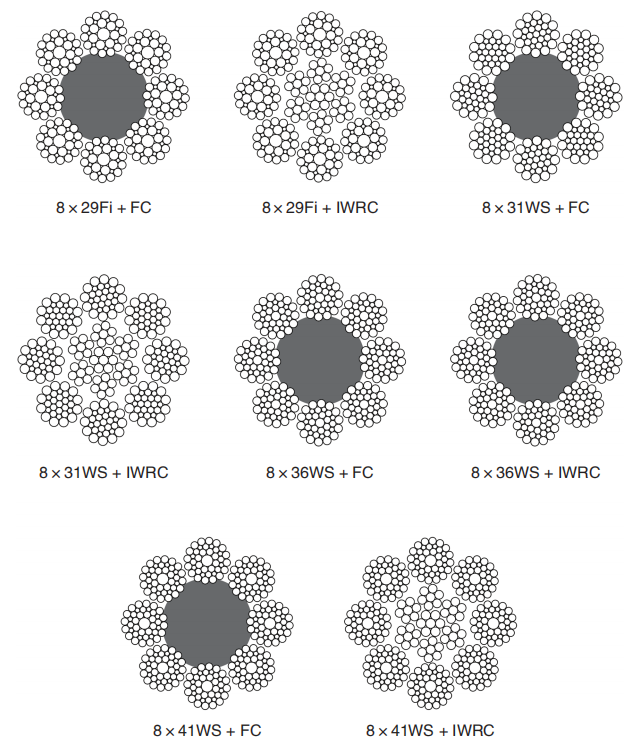
We supply PI rope in 8XK26WS-EPIWRC and 8XK36WS-EPIWRC as eight-strand flexible constructions, in 6X36WS-EPIWRC for six-strand duty, in 6XK36WS-EPIWRC for compacted six-strand work, and in 35WXK7-EPWSC and 35WXK7-EPIWRC as compacted low-rotation ropes for high lifting.
| Construction | Strands | Character | Typical use |
|---|---|---|---|
| 8XK26WS-EPIWRC | 8 | Flexible, protected core, crush resistant | Cranes, offshore handling, marine lift |
| 8XK36WS-EPIWRC | 8 | High breaking force, multi-layer coiling | Heavy hoisting, marine winches, mining |
| 6X36WS-EPIWRC | 6 | General purpose six-strand | Shipboard cranes, elevators |
| 35WXK7-EPWSC | 35 wires per strand | Compacted, low rotation, less sheave wear | Tower cranes, truck cranes, drilling rigs |
The 35WXK7-EPWSC combines a compacted low-rotation layout with a polymer filled and sealed layer inside the lubricating oil. Our product data describes it as giving high dimensional stability under lateral pressure and resistance to squeezed outer strands.

Where Does PI Rope Make the Biggest Difference?
The value of PI rope is not uniform. It concentrates where the environment attacks the inside of the rope and where it must hold its shape.
PI rope earns its cost fastest in marine and offshore work, in chemical and process environments, and on any drum that coils the rope in multiple layers. On a dry indoor crane with a small drum, a bright rope will usually do the same job for less money.
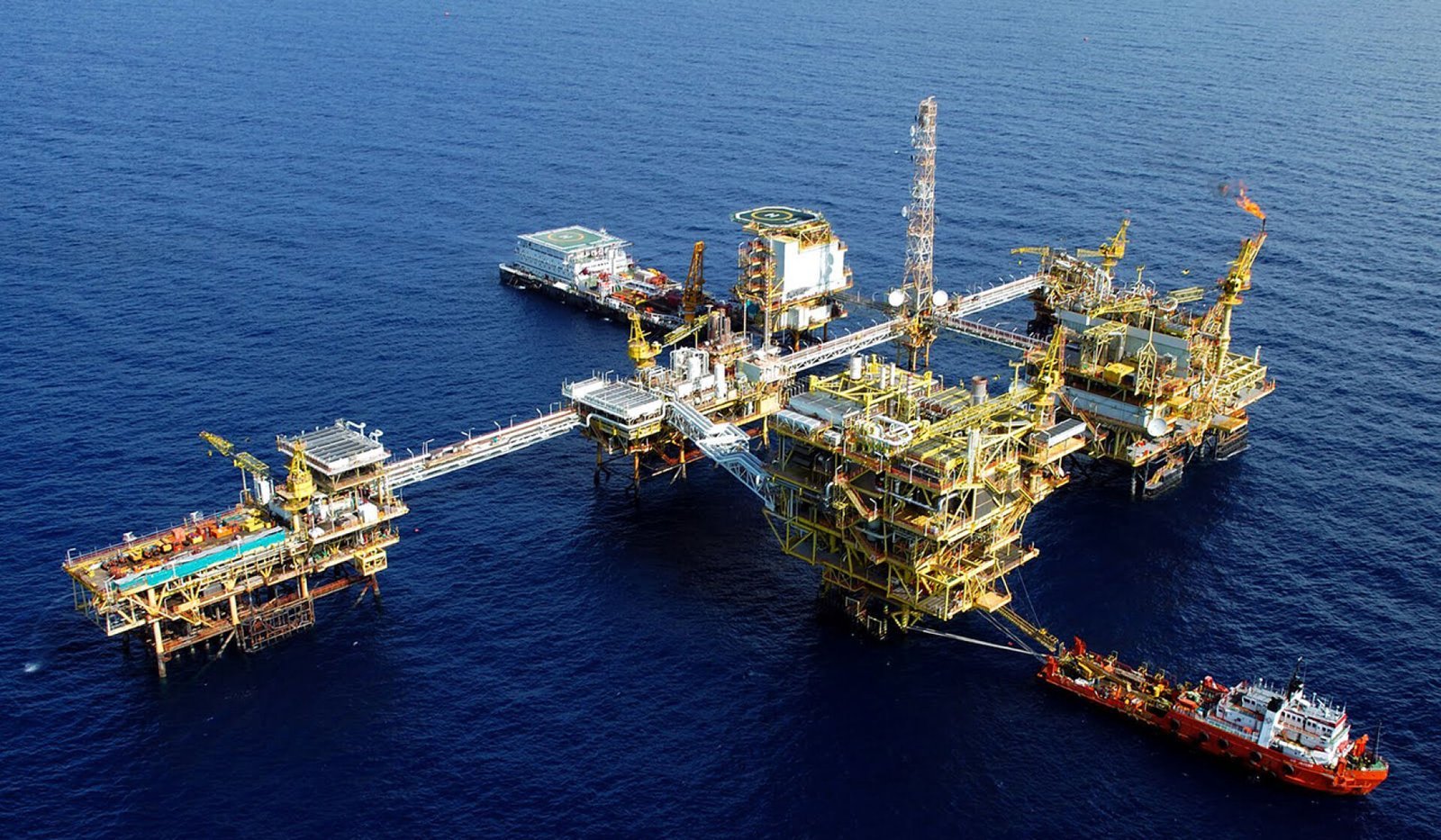
In marine work the failure mode is internal. Seawater enters the strand from the ends and from the surface and stays there against wires a galvanized coating does not fully cover, because the inner wires are exposed through the voids. The PI fill closes that path, which is why PI rope is used for mooring, anchor handling, offshore lifting and shipboard winches. In chemical plant the compound can be matched to the chemical and temperature range.
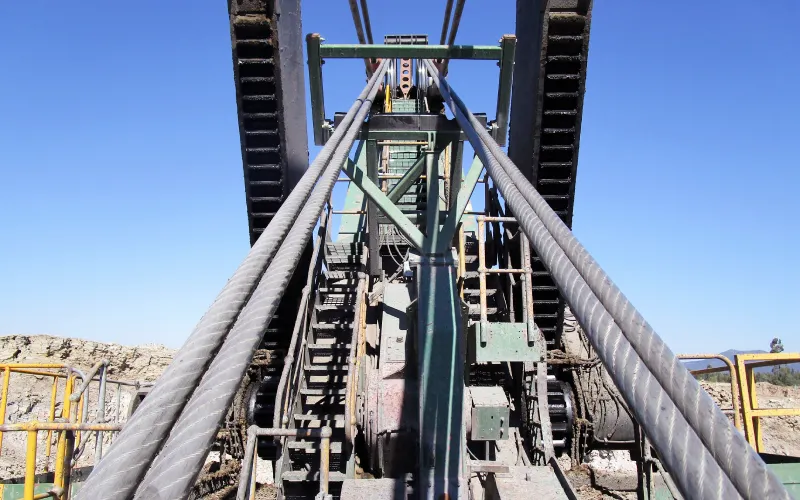
On multi-layer drums the benefit is mechanical rather than chemical. Each layer sits on the ones below and the strand is pressed sideways. PI rope holds its diameter under that pressure, so the layers bed down instead of crushing.
How Does PI Rope Hold Up Under Bending Fatigue?
Fatigue is what ends most ropes, so this deserves a clear answer. PI rope improves bending fatigue performance because the polymer holds the wires in place and reduces the relative movement between them at every bend. The wires are separated by a controlled film rather than sliding directly against each other, so the local stress that causes wire breaks is spread more evenly.
There is a related effect that matters as much. Where wires are free to move, a single broken wire lets the strand unwind locally and the failure spreads quickly. In a PI rope the cured fill holds a broken wire in place, so failure becomes gradual and detectable rather than sudden. That is a safety argument, not just a life argument.
What Do the Mill Certificates Show?
Every PI rope we ship leaves with a certificate. Here are actual figures from certificates we issued.
| Specification | Grade | Diameter | Certified MBL | Measured force | Standard |
|---|---|---|---|---|---|
| 8xK26WS-EPIWRC, bright | 1960 MPa | 30 mm | 766 kN | 778 kN | EN 12385-4 |
| 8xK26WS-EPIWRC, hot-dip galv. | 2160 MPa | 20 mm | 354 kN | 365 kN | EN 12385-4 |
| 35WXK7-EPWSC, galvanized | 2160 MPa | 36 mm | 1147 kN | 1155 kN | EN 12385-6 |
Two things stand out. The measured force is above the certified minimum on every one of these ropes, and the measured diameter sits slightly above nominal, 30.8 mm on the 30 mm rope, which is what you want on a rope that must fit a sheave.
What Are the Limits of PI Rope?
We would rather set the boundary ourselves.
PI rope is not a universal upgrade. It does not protect against external abrasion, it costs more than a bright rope, and it is the wrong choice when the duty is dry, clean and low cycle.
On abrasion, remember the polymer is inside the rope. A rope dragged over rock, a sharp sheave lip or rough concrete will damage the outside wires no matter what fills the voids, so for external wear specify a coated rope.
On cost, if the drum is small, the environment is dry and the cycle count is low, a bright or galvanized rope will carry the load for less money. On inspection, PI rope is still a steel wire rope: look for broken wires, strand distortion, rope deformation and movement at terminations.
How Do You Specify PI Rope for Your Application?
The specification is simple once the environment is clear.
Tell us the application, the environment, the drum or sheave arrangement, the load and the cycle count, and we will return a PI rope specification with the construction, the grade, the certified minimum breaking load and the certificate standard. Send us the drawings and the load cases, and we will return a proposal and the parameter table.
These are the points that matter most for a PI rope.
- Environment, marine, chemical, outdoor or dry. This decides whether you need PI at all, and whether it should be bright or galvanized.
- Load and cycle count. This sets the grade, the diameter, and whether you need the compacted low-rotation construction.
- Drum diameter, number of layers, core preference and chemical exposure. These confirm the minimum bending diameter, whether multi-layer coiling applies, and the compound and lubricant we use inside the rope.
- Standard required. We work to EN 12385-4 and EN 12385-6, and can supply to API, ABS and DNV requirements.
Our 16XK7-EP and 35WXK7-EP lines cover the compacted low-rotation side of the range, and we can also quote PI rope with pressed sockets and thimbles to suit the termination you already have.
Conclusion
Galvanized rope and PI rope are often treated as alternatives. They are not. Galvanizing coats the outside of each wire so the zinc sacrifices itself to protect the steel. PI impregnation fills the inside of each strand so water never reaches the inner wires. Used together they cover both halves of the exposure, and that combination is much of our PI order book. What is settled by measurement is the strength question: our PI rope certificates match the bright catalogue values for the same diameter, construction and grade, so corrosion protection does not cost you breaking load. Where galvanizing is involved on our 8XK26WS line, the certified figure sits at about 94 to 95 percent of the bright value.
If you are specifying rope for marine, offshore, chemical or multi-layer drum duty, send us the drawings and the load cases. We will return a technical proposal with the construction, the grade, the certified minimum breaking load and the parameter table, and we will tell you plainly if a rope without PI fill would serve better.