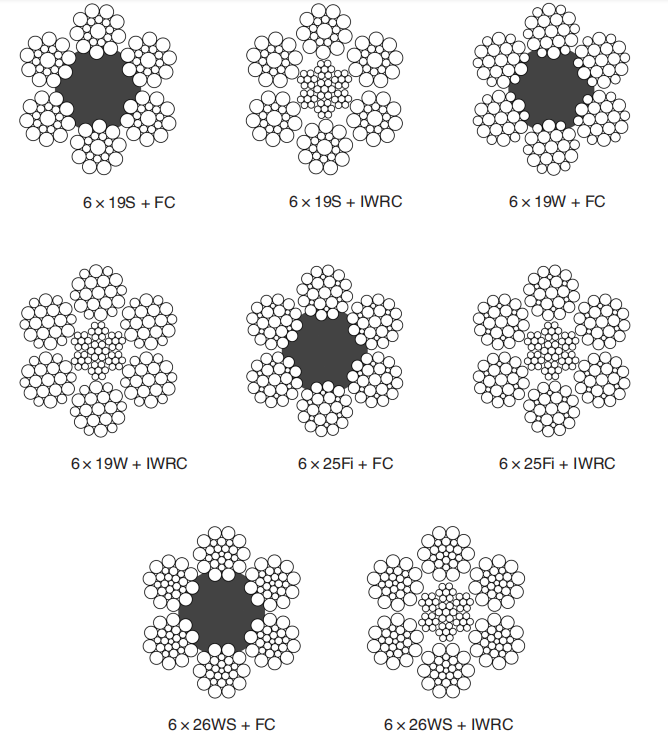
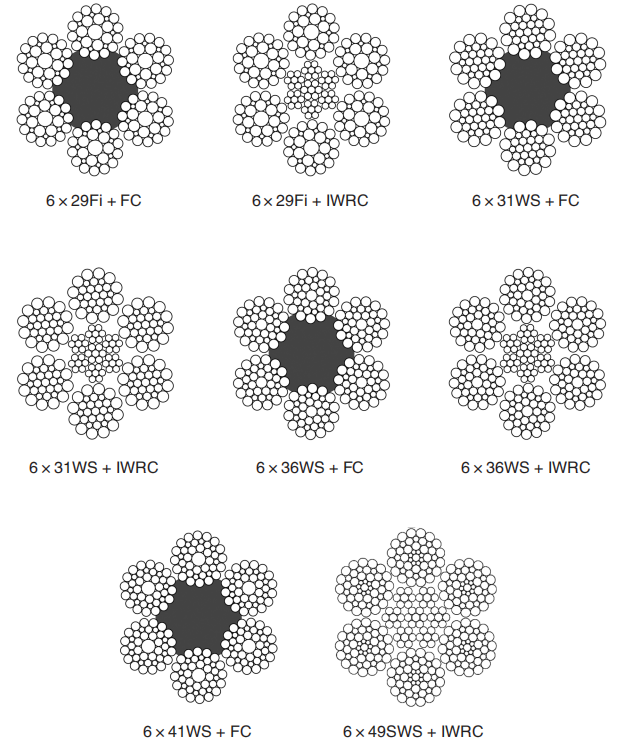
Round strand wire rope is one of the most commonly used types of wire ropes in the world. Known for its versatility, durability, and high load-bearing capacity, it is widely applied across construction, marine, mining, industrial, and transportation sectors. Unlike compacted or shaped strand wire ropes, round strand wire ropes maintain a fully round profile of individual strands, ensuring flexibility and uniform performance. This comprehensive guide provides detailed insights into the construction, materials, features, standards, and applications of round strand wire rope.
The construction of a round strand wire rope is relatively simple but critical to its performance. A wire rope consists of three primary components: wires, strands, and core.
Individual steel wires form the basic unit of a wire rope. These wires are made of high-carbon steel, offering excellent tensile strength and fatigue resistance. The number, diameter, and arrangement of these wires affect the rope’s flexibility, strength, and abrasion resistance.
Wires are twisted into strands, usually in a round cross-section. The standard strand configurations include:
6×19, 6×36, 6×37: Common for general lifting and hoisting applications.
8×19, 8×36: Typically used for heavier loads or specialized purposes.
The twisting direction of strands can be right-hand lay (Z-lay) or left-hand lay (S-lay), which influences the rope’s rotation and torque characteristics during operation.
The core supports the strands and maintains the rope’s shape. Different core types provide distinct performance benefits:
Fiber Core (FC): Made from natural fibers (like sisal or manila) or synthetic fibers, offering flexibility and shock absorption.
Independent Wire Rope Core (IWRC): Steel core that provides higher strength and resistance to crushing, suitable for heavy-duty operations.
Plastic or Lubricated Cores: Enhance resistance to corrosion and reduce internal friction for longer service life.
Round strand wire ropes are primarily manufactured from high-carbon steel wires, which can be heat-treated to achieve specific tensile strengths. Depending on the application environment, wire ropes may receive different coatings or treatments:
Hot-dip or electro-galvanized coating provides protection against rust and corrosion, making it suitable for outdoor, marine, or humid environments.
Wire ropes may be internally or externally lubricated with grease to reduce friction, prevent wear, and protect against corrosion. Proper lubrication is critical for prolonging service life, especially in dynamic applications with frequent bending or rotation.
A plastic coating, such as PVC or PE, offers enhanced protection against abrasion, chemicals, and environmental factors. Plastic-coated ropes are commonly used in marine, forestry, or mining operations where ropes are exposed to harsh conditions.
Round strand wire ropes are favored for their flexibility, uniformity, and versatility. Key features include:
Flexibility: Ideal for applications that require frequent bending or spooling onto drums and pulleys.
Durability: High resistance to wear, fatigue, and abrasion under normal working conditions.
Versatility: Suitable for lifting, hoisting, towing, and rigging operations.
Ease of Handling: Round shape allows smooth installation and spooling.
Standardized Sizes: Manufactured according to international standards, making replacements and maintenance straightforward.
Advantages over other wire rope types:
| Feature | Benefit |
|---|---|
| Round wire strand profile | Maintains flexibility and consistent spooling |
| Fiber or steel core options | Allows customization for strength and shock absorption |
| Galvanized or coated surfaces | Provides long-term protection in harsh environments |
| Multiple construction options | Enables matching rope characteristics to specific application needs |
Round strand wire ropes are used extensively across industries due to their balance of flexibility, strength, and cost-effectiveness. Typical applications include:
Tower cranes and hoists
Elevator cables
Winches and scaffolding rigging
Mooring lines and towing ropes
Lifting cargo on ships and ports
Fishing and aquaculture equipment
Conveyor belts and machinery
Material handling and lifting devices
Heavy-duty winches
Cable logging
Tractor and equipment rigging
Irrigation and farm machinery
Round strand wire ropes are particularly useful for dynamic operations, where ropes are wound and unwound frequently, as well as for static loads, such as mooring or anchoring.
High-quality round strand wire ropes are produced under strict quality control and meet international standards:
EN 12385: Steel wire ropes for general purposes, covering dimensions, construction, and safety requirements.
ISO 2408: Steel wire ropes for general lifting applications, ensuring consistency in strength, flexibility, and performance.
DIN 3060: Specifies safety requirements and testing procedures for wire ropes.
ASTM A1023/A1024: Covers performance specifications for carbon steel wire ropes.
Testing and certification include:
Tensile strength tests
Fatigue and bending tests
Dimensional inspections
Breaking load verification
Third-party testing and certification support are available to meet client-specific requirements, particularly for critical lifting or marine applications.
When selecting a round strand wire rope, consider the following factors:
Load Requirements: Ensure the rope’s breaking force exceeds the maximum operational load with an appropriate safety factor.
Bending Conditions: For frequent bending, choose a construction with more wires per strand (e.g., 6×36 or 8×36) for better fatigue resistance.
Environmental Conditions: For marine or corrosive environments, opt for galvanized, lubricated, or plastic-coated ropes.
Core Type: Select fiber cores for flexibility and IWRC for higher crushing resistance and heavy loads.
Compliance and Certification: Verify conformity with ISO, EN, DIN, or ASTM standards for your application.
Proper maintenance is essential to maximize the service life of round strand wire ropes:
Lubrication: Regular lubrication reduces friction and prevents internal corrosion.
Inspection: Routine inspection for broken wires, abrasion, or corrosion is critical.
Avoid Overloading: Never exceed the rope’s working load limit (WLL).
Storage: Store in a dry, ventilated area away from chemicals and direct sunlight.
With proper care, round strand wire ropes can last several years, even under demanding conditions.
Round strand wire rope is a reliable, flexible, and versatile solution for lifting, rigging, towing, and general industrial use. Its simple round strand construction, wide range of material options, and adaptability to different cores and coatings make it suitable for nearly every industry. Whether used in construction cranes, marine mooring, industrial machinery, or agricultural equipment, round strand wire rope combines strength, durability, and ease of use. By choosing the right construction, material, and coating, and following proper maintenance and inspection procedures, users can achieve long-lasting, safe, and cost-effective performance.
For buyers and engineers, round strand wire rope offers:
Strong, flexible, and durable lifting capacity
Wide compatibility with standard equipment
Customizable solutions for specialized applications
Compliance with international standards and certifications
Round strand wire rope continues to be a trusted choice for professionals worldwide who require reliable performance and operational safety in all lifting and rigging operations.
Kaiyuan road 36,Chunkou,Liuyang, Hunan,China.
info@steelwireropes.cn
admin@steelwireropes.cn
Phone : +86 15573139663
WhatsApp : +86 15573139663
Expert guidance on wire rope specifications and applications
WhatsApp us
Free samples, product catalog, and expert consultation available.